Saturday, June 11, 2011

For a good rest: the Santa Croce

To the eastern part of the city of Florence there's a Franciscan church that stands out for an interesting characteristic. It is a church that became popular as a final resting place for many Florentines.

The entire church is intentionally unimpressive, as opposed to other much more grandiose churches at the time. The idea is again a Franciscan theme of humility and poverty. Over the years though, the public people of Florence would constantly provide donations to the church. Despite being quite large and still well decorated, it still portrays a simple image.

Inside the church complex, there tombs and sepulchers all over the place. Many are even on the floor of the main church. This is a practice that goes with the Franciscan ideal of humility. It serves to remind the living that we are dust that may be trampled upon, and invites one to meditate on death and life beyond it.

Though originally it was the common public who first chose this place to be buried, eventually more illustrious members of Florentine society would choose this as their burial site.

Galileo, who wasn't on good terms with the pope at the time, has a sepulcher here. The Franciscans secretly took his body after he died and buried it in the sacristy of the Santa Croce. They felt that everyone deserved a Christian burial. Eventually Galileo was vindicated, and now his body rests in the main church under a grand monument.
Galileo's tomb with his bust

Directly across Galileo is the tomb of Michelangelo. Despite the artist's wishes to have his body remain in Rome, the Medicis, Michelangelo's primary patron and most powerful family in Florence, brought his body back to Florence.
Michelangelo's tomb

Also buried here is Niccolo Machiavelli, who is famous for his book "The Prince". Finally, there is a monument to Dante. Despite many attempts by the Florence municipality to get his body, all their attempts have been denied.

Machiavelli's tomb

Inside the church museum, they have the famous Cimabue cross. Originally in the main church facing the congregation, it was eventually removed for preservation and replaced with a copy. It's notable because it's the first time that Christ on the cross is depicted suffering as opposed to triumphant. It's a lesson that the Franciscans wanted to impart on the public. Jesus, though God, is still a man like all of us. Thus He knows very well all our needs and weaknesses.

The Cimabue cross, in need of much restoration still

The amount of restoration work here is quite painstaking. In the 17th century, there was a great flood that reached the height of 7 feet. This obviously damaged the art in the area significantly. Over the years, slow meticulous work has been done to preserve the works and restore them to a state that can be enjoyed today.

BONUS: The robe worn by St. Francis of Assisi

Wednesday, June 8, 2011

The City Museum

Ahh... Venice. Despite the steady drizzle, there is something about Venice. I could not help but feel a bit giddy as I rode the waterbus out of the bus station and into the heart of the Grand Canal. The fact that the whole city is amidst a lagoon is common knowledge, but being there in person certainly makes one marvel at the entire city.

A view of St. Mark's Square

The oh-so-famous gondola

The theme for this city for me is without a doubt water. Obviously there are the canals and small rios. Aside from that, it rained for the entire time that I was here. So not only was there water beneath my feet but also above my head. I didn't let it dampen my spirits though as I made my way around the city.

After hitting up St. Mark's Square, the basilica and Doge's Palace, I decided to take a break from all the museums and exhibits. Instead, I treated the entire city of Venice as a museum. I threw my map away, and started walking. I ended up in all sorts of places, and I probably couldn't find them again if you asked me to. The entire city is like a large labyrinth. I completely lost count of the times that I would walk around until I wound up facing a wall. Or ever worse, walking about on a path that leads up to a waterway.

Squeezing my way through

My walk would lead me through all sorts of alleys, some just wide enough for one person to pass through. Often, you feel like there's no way a certain alley could lead anywhere. Then all of a sudden a church will spring out of the next corner or suddenly you're in an open space with a theater.

Then of course there are the waterways. Only gondolas and private boats could enter the narrower ones, but I was able to take a waterbus the length of the grand canal. It was simply amazing. I find it both impressive and amusing that the most beautiful facades of the city are facing the water. Wide open to the elements, they still display Venetian affluence and vanity. To think that some are only a shadow of their former elegance simply increases my amazement.

Now how do I get there??

I can't imagine being a citizen of Venice. Not only is it so confusing to navigate these streets, but I would perpetually have to play host to all these tourists! At least in other cities, you could tell who were locals. Here in Venice it seems everyone's a member of some tour, or simply another traveller as revealed by their cameras around their necks.

Certainly a great place to be a tourist though.

Monday, June 6, 2011

Cimitero Monumentale

Just a quick aside on a neat yet eerie destination. In Milan, there's a large cemetery at the northwestern part of the city. Getting there is a bit humorous. Once I got off the nearby train station, I noticed that a lot of people were speaking Chinese! It seems I had stumbled across the Chinese part of town. Walking there I could see Chinese stores selling all sorts of goods. It was fun to see all these people. It pretty much emphasized the fact too that Milan has a strong international community.

Here's the cemetery!

Heading into the cemetery was chilling. For a while, I was quite alone in the whole place. Aside from the gatekeeper, I was by myself beside towering monuments to the dead. Creepiness aside, these monuments are quite impressive. From little busts of passed loved ones to life size statues.

This towers in the middle of the cemetery

It's a full range too, from religious statues of angels and the risen Christ, up to the most mundane of workers digging. There are statues of weeping men and women, some of youth in jovial poses. Some monuments are even quite modern. It truly depends on the fancy of the family.


All sorts of statues to see

I wonder what his story is...

Out here and exposed to all the elements, they cannot be well kept at all. Nonetheless, it's still a grand expression of their love for their departed.

Padua and St. Anthony

Arriving in Padua feels like cutting a trip short. It's literally half an hour out of Venice, so most people don't even spend the night. They just treat Padua as a day trip. In fact, it may be better suited for one.

That didn't mean the hostel was empty though. Saturday night was a full house. I met a half Italian, half Canadian man who encouraged me to check out two additional places near Florence: Lucca and San Gigignano. If I have time, I may just do this.

Going back to Padua though, taking the tram into the city is a bit weird. There a lot of people gathered up in certain areas. There's the main square, the park and the basilica. Aside from these areas though, Padua seems like a very quiet place.

Padua is far from insignificant though. It's most famous of course for its saint who bears its name: St. Anthony of Padua. St. Anthony wasn't born in Padua, but in Lisbon. Padua is the city Anthony associated himself with though, and thus he is buried there. His basilica is a popular pilgrimage site because not only is his body buried there, but in the room with his relics, his uncorrupted tongue is in a reliquary!

The basilica of St. Anthony
The square of the saint

Padua was historically a place of learning, since it has one of the oldest universities in Italy. In fact Galileo Galilei himself taught here for a decade or so! I passed by the street where his house used to be. Unfortunately, the university was closed while I was there, since it was the weekend. I didn't get to see the room he taught in.


The street where Galileo once lived

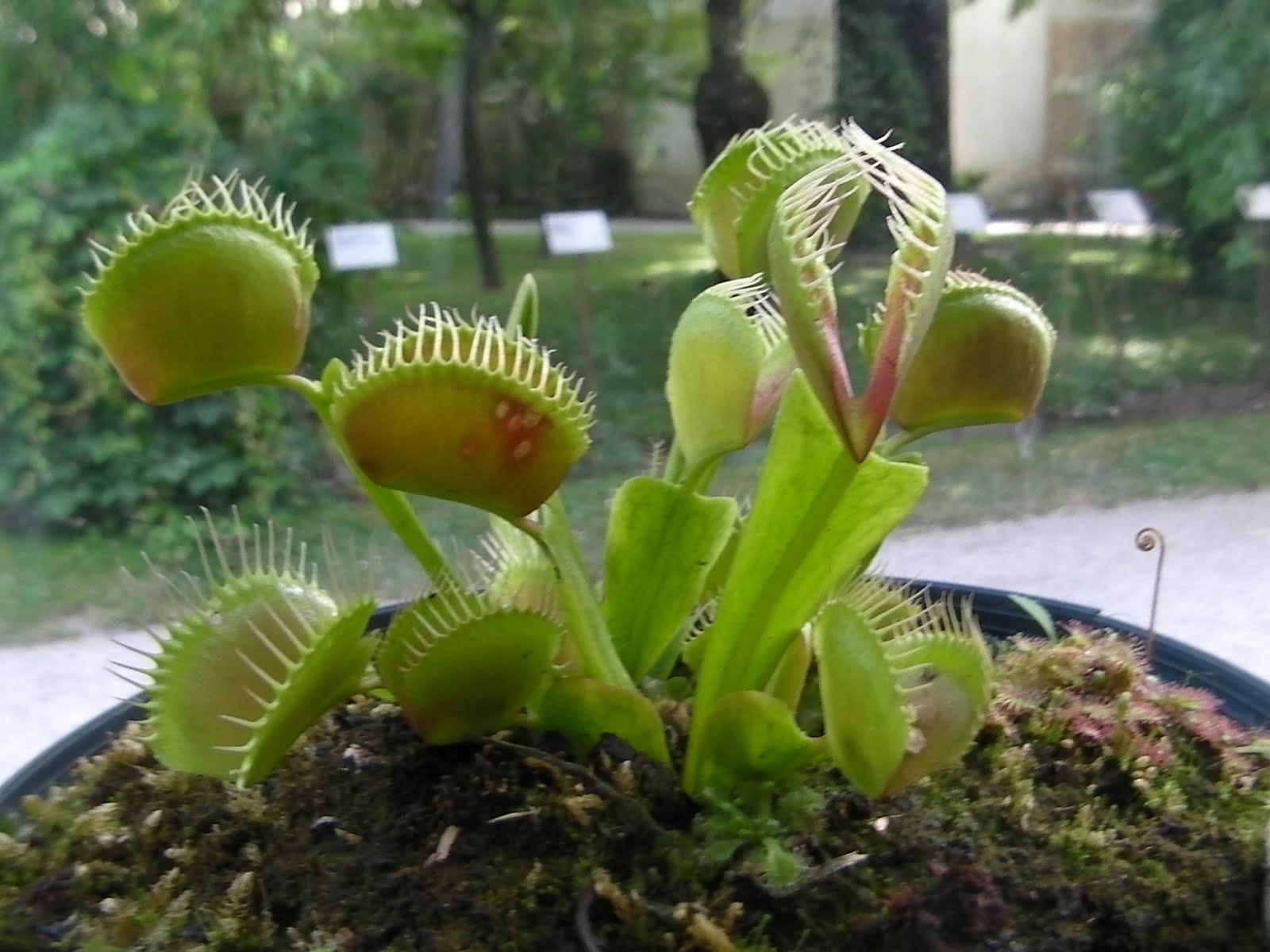
Padua is also home to the world's oldest botanical garden. It's a world heritage site for being the first of its kind. It pales in comparison to botanical gardens of today, but back then it was the birth of studies like botany and pharmacy. It also supplemented the study of chemistry very much.

The Venus fly trap!

Just one fun gem in the city is a Foucault pendulum. It's a amazing simple device that was used historically to prove that the earth rotates on its own axis, as opposed to the sun revolving around the earth. It's here because Galileo proposed this but was not able to scientifically prove this. Foucault did eventually, and so a pendulum sits here.

The Foucault pendulum. 20 meter metal wire and 16kg iron ball

Montserrat

Deep in the heart of the Montserrat mountains, there is a church perched near the summit. I was very much looking forward to this trip. It would be like a mini pilgrimage for me. My cousin Maya and I would take a train an hour out Barcelona, then finally a cable car to the area.

One of the minor chapels

The basilica of Montserrat is dedicated to statue of the black virgin. The story surrounding the entire place is quite mythical. Supposedly, the statue was carved by St. Luke the evangelist. As they were transporting the statue, passing by Montserrat, the statue suddenly became too heavy to lift. Thus it was said that the virgin chose the spot to rest.

Upon arriving there and getting off the cable car, I was stunned. There were so many people! Tourists of all sorts, children on school trips. It surprised me to find that this is actually a popular destination as opposed to the hermitage I expected it to be.

A view from the cable car station

All the people aside though, it is a nice area. To get around, one can walk on many of trails on the mountain. If walking's not your style, there are little trams that go up and down to certain points.

One of the best things we saw there was a stations of the rosary. Yeah, not cross, rosary. On one of the mountain trails, there are fifteen statues or sculptures that depict the joyful, sorrowful and glorious mysteries. This all ends in a small chapel called Santa Cova. This cave converted to a chapel is the original site of the virgin statue.

The agony in the garden

The longest trail of Montserrat (which we didn't do) is two hour hike up the heart of the mountain. This leads all the way up to what used to be the secluded houses for monks, or anyone who is interested in doing some meditation. It's a good 1000 meters above sea level.

When we went up partially, the weather was chilly and there was a mist all about. You couldn't see 10 meters past your place. All this gave off the feel of a poorly written horror film. Two young people going for a hike on a misty mountain. Kulang na lang we split up. Still I can imagine this place as being a good place to get seclusion from the city far below, and even the rest of the monks down at the basilica.

Not a mistake, this is a picture of the mist

Then of course there's the basilica itself. One of my highlights was seeing the statue of St. Ignatius. The story is that St. Ignatius, upon his conversion, went to Montserrat and offered his sword to the virgin, giving up the life of a soldier for spiritual warfare. It was also nearby that he wrote his spiritual exercises.

Here he is Ateneans (and Xaverians)

The Duomo of Milan

Just a stone's throw from my place, I made this my first stop. One of the best parts about traveling solo is that I can take my sweet time. So I got an audioguide and spent 3 hours soaking up one of the greatest cathedrals in the world.

The whole cathedral is a great work of art. The outside is filled with so much detail that it would be impossible to take note of everything. Amidst all the statues of saints, angles and biblical figures, the dedication of the church stands out "Mariae Nascenti". This church like many others is dedicated to the Virgin Mary.

A tiny portion of the great facade

The interior is large and quite imposing. Just like the outside of the church, the inside too is loaded with detail. It is lined with columns, each about 20 meters high. Near the top of each column is a little niche with about 8 statues of various religious figures.

They're all starting to look alike..

There are far too many things to see in this church, but I'll mention a couple of my highlights. First there's the stain glass windows. The church is surrounded by these windows on both flanks leading all the way up to the apse. Each window will contain a story of some sort. One has the story of Joseph, another of John the Baptist or of King David. This all leads up to the front where there are three grand stained glass arches. One on the left filled with images from the old testament, the right with images from the new testament and the central one with the final judgement.

In a gruesome yet compelling moment, I came upon the statue of St. Bartholomew. He was skinned alive when he refused to stop preaching. The statue here depicts him with his skin draped all over his body. Apart from the fact that it's a terrifying thing to imagine, the statue is notable because of its accuracy in depicting the anatomy of the human body.

See the ribcage and the muscles?

High above the main altar is kept a very special gem that belongs to the church. On the dome, in a small cross surrounded by a sun, at the very center, is kept one of the nails that was used during the passion of Christ. It's a small tiny detail, but one that is hard for me to wrap my head around. To think that a relic like that has survived all these years, and to eventually be kept here directly above my head is simply mind boggling. It was said to have been a gift from the emperor Constantine to the city of Milan.

The safest place. 30m above ground

Finally, for an extra fee, I went up to the roof of the Duomo. I'm not sure whether or not any other cathedrals let you up to their terrace, but it was nice to be atop this one. From the roof, I could get a closer look at the spires. At the very top of the cathedral sits the statue of our lady of the assumption. From the ground she looks quite small, but when you get up close you can see that she's about 4 meters tall! It's a pretty impressive statue.


"Hospitalized" Hostelling

Don't worry. I'm alright. Just describing the last hostel I was staying at in Milan.

The place was called Zebra Hostel. It seemed to be under renovation though when I was there. That didn't make it uncomfortable or anything. In fact, it was a nice place. All I really need after all is a bed, and free wifi somewhere in the building (preferably on the bed). The rest is all just Russian roulette.

The most amusing bit about that hostel was that we were all put in one room. One large room with about 48 beds. It was just like being in a post-war hospital ward.

The east side


The west side

And as if that weren't enough to make you feel like a refugee, they tagged us. With hospital bracelets.

Patient 314

I exaggerate though. It wasn't bad at all. There was free breakfast, free wifi, clean sheets, (usually) hot shower. I just find it really amusing that it resembles a hospital set-up.

Here's the bugger I fear....
*Shiver*